
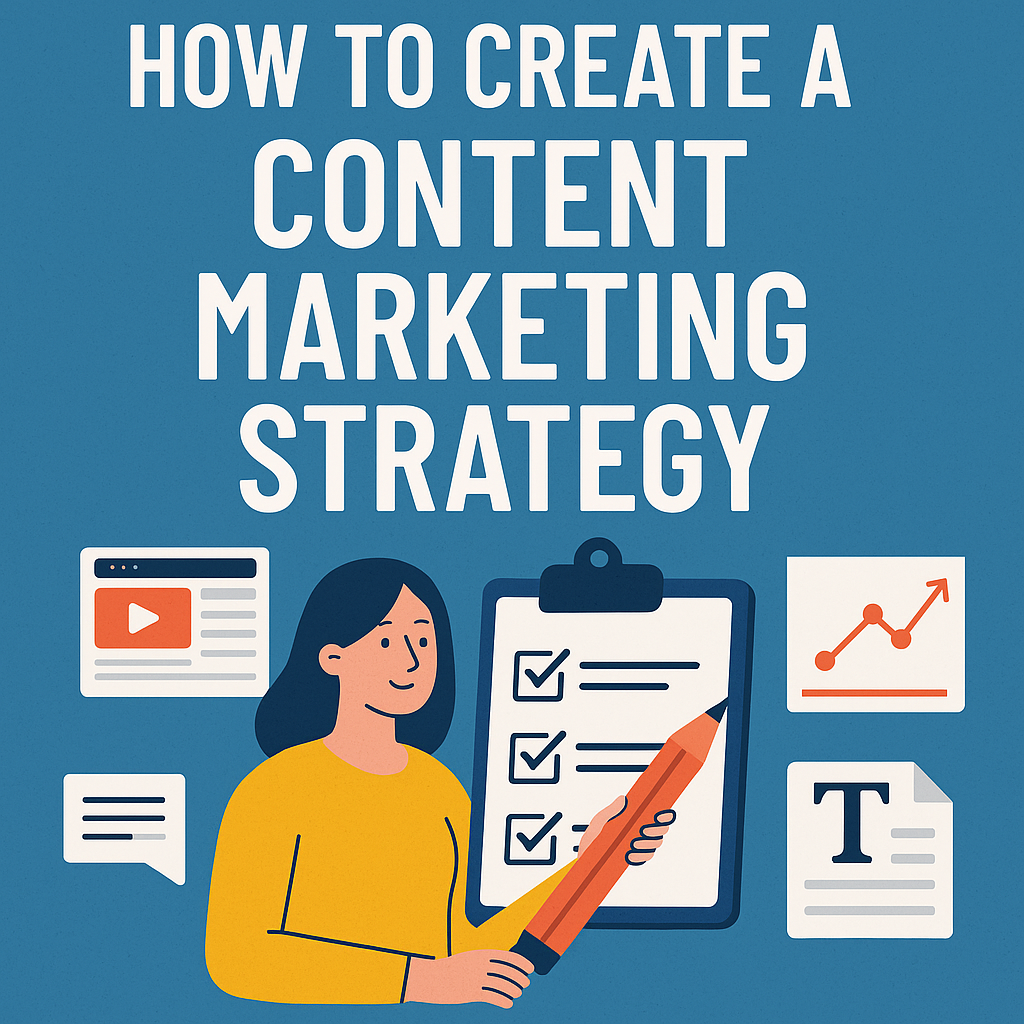
How to Create a Content Marketing Strategy
From Blank Page to Brand Powerhouse: A Strategic Guide That Delivers Value (and Results)
Creating content without a strategy is like cooking without a recipe. You might get something edible, but chances are it won’t taste great—or get the results you want.
Related: How to Create a Marketing Calendar (+ 5 Free Templates)
Content marketing is no longer about just blogging or throwing up a few posts on LinkedIn. It’s about crafting a cohesive, strategic approach that aligns with your business goals, attracts the right audience, and builds trust over time.
So if you’re ready to move from random acts of content to a results-driven content marketing machine, you’re in the right place.
Let’s build a strategy—from the ground up.
What Is Content Marketing (Really)?
Content marketing is the practice of creating and distributing valuable, relevant, and consistent content to attract and retain a clearly defined audience—and ultimately, to drive profitable customer action.
Think of content marketing as the long game. You’re building a relationship with your audience before you ever ask them to buy.
The tools can vary—blogs, videos, podcasts, emails, webinars—but the goal is always the same: provide value first, earn trust second, convert third.
Step 1: Define Your Goals and KPIs
First things first: What do you want your content to achieve?
Common goals include:
- Increase brand awareness
- Drive website traffic
- Generate leads
- Educate and nurture prospects
- Convert visitors into customers
- Retain and delight existing customers
Once you’ve nailed down your goals, define Key Performance Indicators (KPIs) to track success. Think:
- Organic traffic growth
- Time on page
- Conversion rates
- Email subscribers
- Lead quality
- Social engagement
Without clear goals, your content is just noise.
Step 2: Know Your Audience (Like, Really Know Them)
Marketing without audience insights is like throwing darts in the dark. To craft content that resonates, you need to understand:
- Who they are (demographics, job roles, industries)
- What they care about (pain points, challenges, desires)
- How they consume content (blogs, videos, email, social)
- Where they hang out online (LinkedIn, TikTok, Reddit)
Build detailed buyer personas and use tools like:
- Google Analytics
- Customer surveys
- CRM data
- Social listening tools
- Direct interviews
The better you understand your audience, the more relevant your content becomes—and relevance is the rocket fuel of engagement.
Step 3: Conduct a Content Audit
Before you add more content to the pile, audit what you already have.
Ask:
- What content is performing well?
- What’s outdated or underperforming?
- What gaps exist in your content funnel?
- Are your posts optimized for SEO and conversions?
Use tools like:
- Google Search Console
- SEMrush or Ahrefs
- Screaming Frog
- Airtable or Notion for organizing your audit
Your audit will help you repurpose winners, refresh stale content, and eliminate low-performers—maximizing ROI before creating anything new.
Step 4: Choose Your Content Pillars
Your content pillars are the core themes that your content will consistently support. These should align with:
- What your audience is searching for
- Your company’s expertise
- Keywords with solid search intent
- Your products or services
For example, a project management SaaS might have these content pillars:
- Team collaboration techniques
- Project planning best practices
- Remote work productivity
- Software comparisons
- Workflow automation
Think of pillars as the backbone of your content universe. Everything you publish should support one of these key themes.
Step 5: Develop a Content Funnel
Not all content should be about closing a sale. Different types of content serve different purposes in the buyer journey.
The Content Funnel:

By mapping your content to the funnel, you ensure you’re not just attracting traffic—but moving people through a strategic path to purchase.
Step 6: Choose the Right Content Formats
Not everyone wants to read a 2,000-word blog post. Some prefer video. Others love infographics or social threads.
Match your content format to:
- Audience preference
- Message complexity
- Channel of distribution
Popular formats include:
- Blog articles
- Short-form and long-form videos
- Reels and TikToks
- Infographics
- Podcasts
- Slide decks (for LinkedIn or SlideShare)
- Email newsletters
- Interactive tools (calculators, quizzes)
The magic happens when your format fits the content AND the audience.
Step 7: Build a Content Calendar
A content calendar brings structure and sanity to your strategy. It helps you:
- Plan themes and campaigns
- Assign tasks and deadlines
- Track publishing schedules
- Avoid content gaps or overload
Use tools like:
- Google Sheets
- Trello or Asana
- Notion
- CoSchedule or Monday.com
A solid calendar includes:
- Content topic
- Content type
- Target keyword
- Funnel stage
- Owner
- Deadline and publish date
Plan it monthly or quarterly—but keep it agile.
Step 8: Promote Your Content Like You Mean It
Content creation is only half the battle. The other half? Distribution.
Use the rule of 80/20: spend 20% of your time creating and 80% promoting.
Smart promotion tactics:
- Share across all social platforms
- Repurpose into micro-content (e.g., quotes, reels, carousels)
- Send via email newsletters
- Use paid ads to amplify top-performing posts
- Collaborate with influencers or partners
- Repost and refresh evergreen content regularly
If content is king, distribution is the army.
Step 9: Measure, Learn, Improve
You can’t improve what you don’t measure. Regularly review your content performance based on the KPIs you set earlier.
Ask:
- Which pieces drove the most traffic?
- What formats are resonating?
- Which content converts best?
- Are we reaching the right audience?
Use the data to:
- Refine your topics and formats
- Double down on winners
- Rework or remove underperformers
- Experiment with new approaches
Great content marketers don’t guess—they test, iterate, and evolve.
Step 10: Keep It Consistent
The best content strategy in the world means nothing if you ghost your audience for months at a time.
Consistency builds:
- Trust
- Credibility
- SEO equity
- Audience habits
Whether you post twice a week or twice a month—stick to it. Your audience (and Google) are watching.
Final Thoughts: Content Strategy Is the GPS of Your Marketing Engine
Without a strategy, content marketing is just… marketing noise. But with the right plan in place, content becomes a lead magnet, trust builder, and conversion engine.
Your strategy should evolve as your business does—but it should always be grounded in your audience, your goals, and your unique point of view.
So build the plan. Write the playbook. Be the brand that doesn’t just create content—but creates value.