

140 Characters of Strategy: Turning Tweets into Trust, Traffic, and Transactions
Why Twitter (Still) Matters for Business
In the noisy, scroll-happy world of social media, Twitter might feel like the old-timer at the digital cocktail party—however, don’t count it out. With over 500 million tweets sent per day, the platform remains one of the fastest ways to reach people in real time, showcase brand personality, and spark conversation that leads somewhere meaningful.
- Share timely updates and announcements
- Build a recognizable brand voice and point of view
- Join trending conversations as they unfold
- Engage directly with customers and thought leaders
- Drive traffic to content, offers, and events
In short, Twitter is less like a billboard and more like a roundtable where brands, customers, and competitors all pull up a seat. When you learn how to navigate it, you can turn your handle into a marketing machine.
1. Set Up a Business-Ready Twitter Profile
Think of your profile as your brand’s handshake. It should feel polished, approachable, and unmistakably you. To that end, optimize the essentials below.
- Handle: Keep it consistent with your brand name.
- Profile image: Use your logo (or your face for a personal brand).
- Header image: Highlight a product, event, or clear call-to-action.
- Bio: State what you do and sprinkle in personality or an emoji or two.
- Location: Add this if you serve a specific area.
- Website link: Send people to your homepage or a campaign landing page.
- Pinned tweet: Feature an offer, announcement, or cornerstone content.
Ultimately, your profile isn’t just decorative—it’s directional. Guide visitors where you want them to go.
2. Define Your Twitter Marketing Goals
Before you send a single tweet, pause and ask: Why are we here? Twitter works best when your efforts align with clear goals and corresponding metrics.
- Build brand awareness
- Drive website traffic
- Generate leads or sales
- Provide real-time customer service
- Grow community and authority
Choose one or two primary objectives; then match your tweet style, posting cadence, and KPIs accordingly. In other words, put strategy before posting.
3. Understand the Twitter Audience (and Vibe)
Unlike Instagram or TikTok, Twitter is fast, opinionated, and often news-driven. Consequently, success comes from speaking with—not at—your audience.
- Witty, helpful, or curiosity-driven tweets win attention.
- Threads can function like mini blog posts.
- Polls are powerful prompts for engagement.
- Real-time reactions can explode visibility.
- Emojis and GIFs add voice—use them intentionally.
Above all, Twitter rewards authenticity, agility, and timely contribution.
4. Build a Smart Content Mix
Because feeds move quickly, variety keeps you relevant without burning out your team. Rotate content types that educate, engage, and entertain.
Example Content Strategy
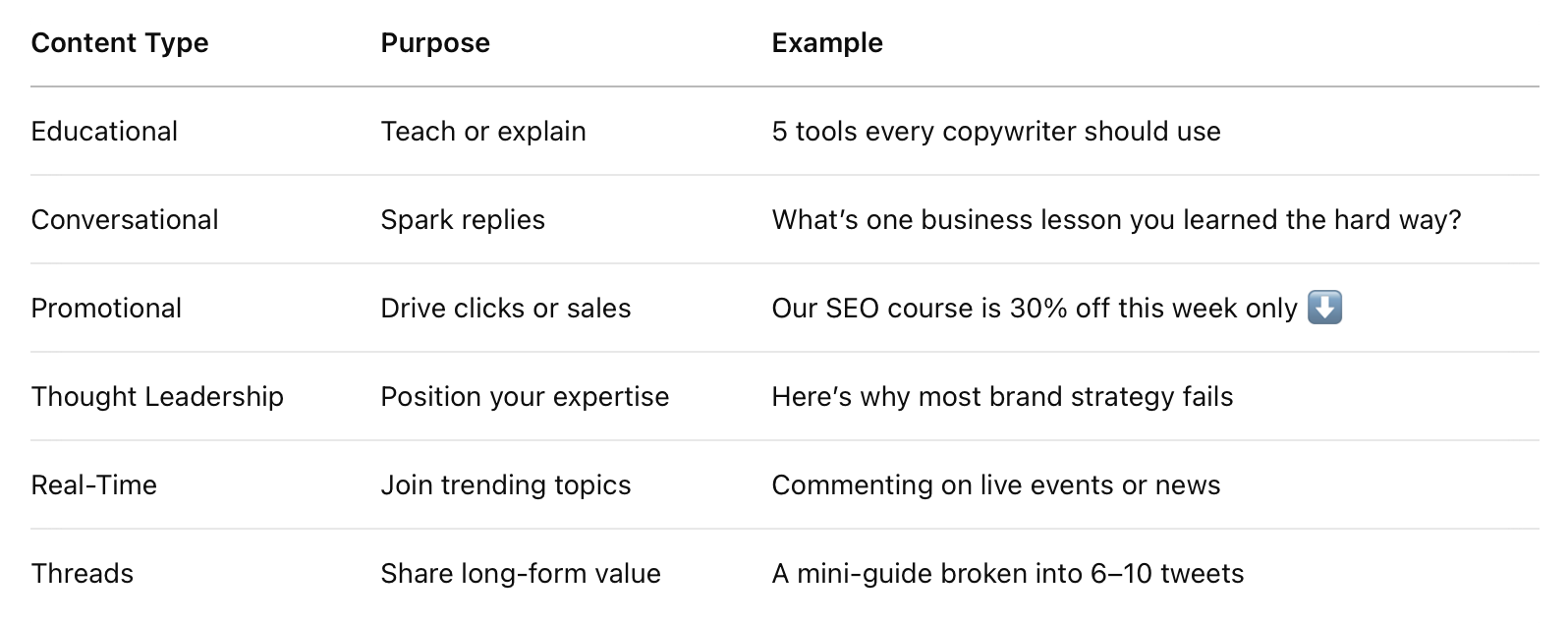
Mix it up. Each tweet should feel like a concise mini-ad for your voice, values, or offer. For deeper content planning, see our guide on creating a content marketing strategy.
5. Use Twitter Threads for Long-Form Content
Think of threads as blog posts that don’t require a click. When crafted well, they spark saves, shares, and followers—and they can even rank in search.
Pro Tips for Threads
- Open with a compelling hook that promises value.
- Break ideas into 1–2 sentence chunks for easy scanning.
- Use numbers or subtle emojis to guide the reader.
- Include visuals (screenshots, charts, GIFs) to reinforce key points.
- Close with a clear call to action (follow, reply, share, or link).
Put your best insights here and watch your reach expand. If you’re driving to longer content, sharpen the headline—our tips on writing compelling subject lines can help with hooks, too.
6. Use Hashtags (But Not Too Many)
On Twitter, less is usually more. Therefore, stick to one or two highly relevant hashtags per tweet.
Use hashtags to:
- Join conversations (e.g., #MarketingTwitter)
- Follow industry topics (e.g., #AI, #SmallBusiness)
- Promote branded campaigns (e.g., #PracticomediaTips)
Additionally, check Trending Topics daily and participate when there’s a natural tie-in to your brand.
7. Engage More Than You Broadcast
Because Twitter is a two-way street, the algorithm—and your audience—prefers interaction over megaphones. As a result, make engagement a daily habit.
- Reply to mentions, comments, and questions quickly.
- Retweet and comment on partner content and industry news.
- Quote tweet with a brief point of view.
- Start conversations with polls or open-ended questions.
- Join or host Twitter chats to meet adjacent audiences.
The more you give, the more you get—think community, not just content.
8. Use Visuals to Stop the Scroll
While the platform is known for words, tweets that include images or video often earn 2–3× more engagement. Consequently, add visuals wherever they enhance the message.
- Branded graphics for promotions and launches
- Screenshots of testimonials or customer wins
- Short product clips or behind-the-scenes videos
- Infographics or simple data charts
- Animated GIFs for tone and emphasis
Pair a crisp visual with a bold statement, and you’ll have a recipe for retweets.
9. Use Twitter Ads (When It Makes Sense)
Paid promotion can amplify what already works. Therefore, start by testing organically and then put budget behind the winners.
- Promote top-performing tweets to reach larger audiences
- Drive traffic to high-intent landing pages
- Grow your following with targeted follower campaigns
- Boost engagement during launches or live events
Begin with Twitter’s native analytics to identify what resonates. Keep ads visually clean, focused on a single action, and aligned with your best organic formats.
10. Track Performance with Analytics
Because improvement depends on insight, make the Twitter Analytics dashboard part of your weekly workflow. Monitor the metrics that matter and iterate accordingly.
- Top tweets by impressions and engagement
- Follower growth over time
- Profile visits and brand mentions
- Link clicks and conversions (tracked via UTM parameters)
Use these data points to refine timing, double down on high-performers, and optimize headlines, visuals, and hashtags. After all, marketing without metrics is just guessing.
Bonus Tips for Business Success on Twitter
- Tweet consistently—aim for one to three times per day.
- Respond quickly to customer inquiries; Twitter is big for support.
- Pin your top offer or CTA for sustained visibility.
- Refresh your header seasonally or for major campaigns.
- Stay on-brand with tone, visuals, and timing.
- Celebrate milestones to deepen community ties.
For broader engagement tactics beyond Twitter, explore our guide to social media engagement.
Final Thoughts: Twitter Is a Cocktail Party, Not a Press Conference
If Instagram is a glossy magazine and LinkedIn is a networking event, Twitter is a smart, slightly chaotic cocktail party. You have seconds to grab attention, join conversations in real time, and deliver value—without sounding pushy or robotic.
The brands that win know their voice, add value, react quickly, build genuine relationships, and embrace the power of the short and sweet. Step up to the mic, be useful, and have a little fun—the audience is listening.